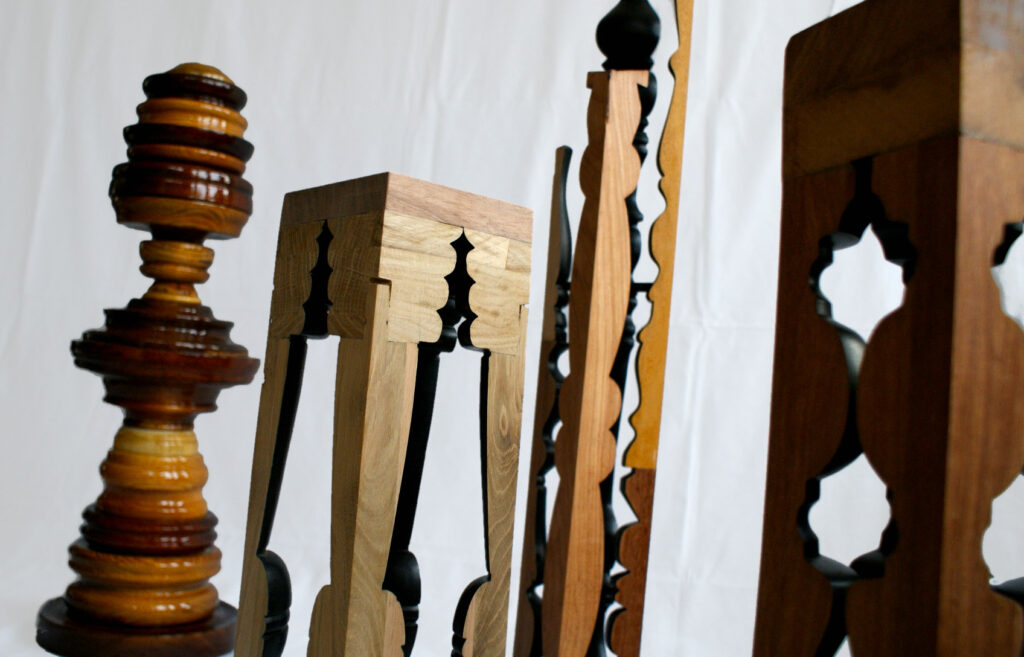
A little while ago, I was approached by someone with a bunch of candles. He asked me if I could turn them into objects, with which I could showcase each of their own unique characteristics. This series would ultimately create a deeper look into makers, the material they use and the way they use them.
Furthermore, the reddish, somewhat more compact candlestick, and the olive green, and airier 2nd candlestick are a good contrast showing how different woodwork can look and what inspires makers to make what they make.
The objects that where the result of these experiments, can be used again as candles, using the hole originally made to put different elements of the candle together.
Part 1/3,
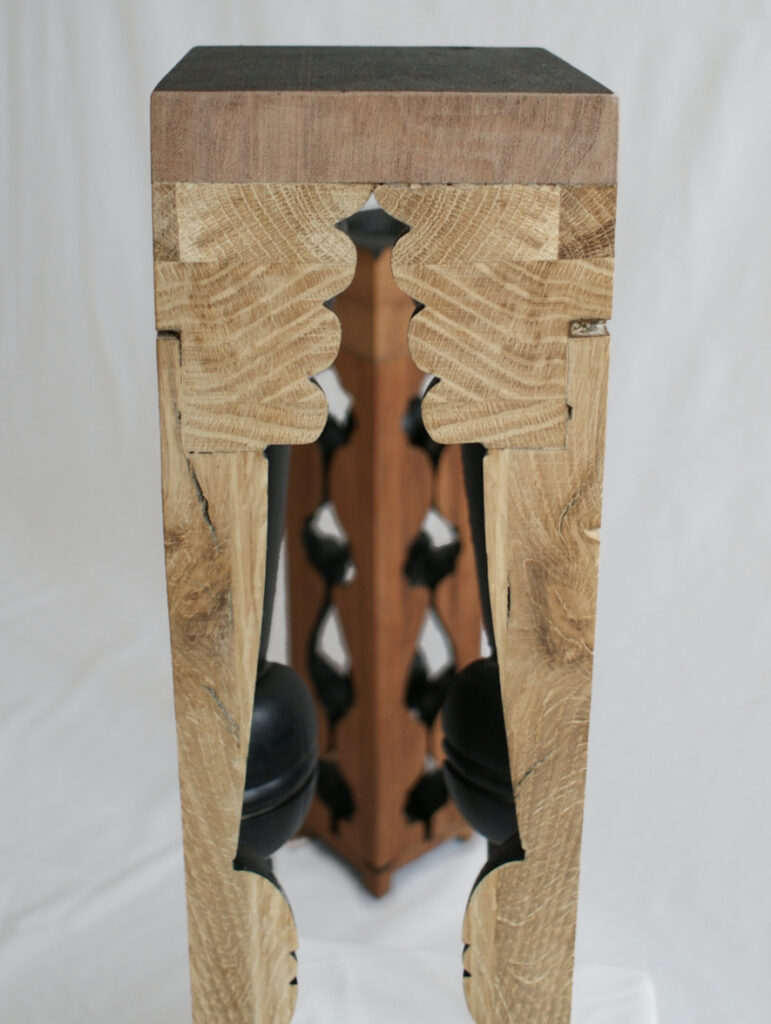
Everted
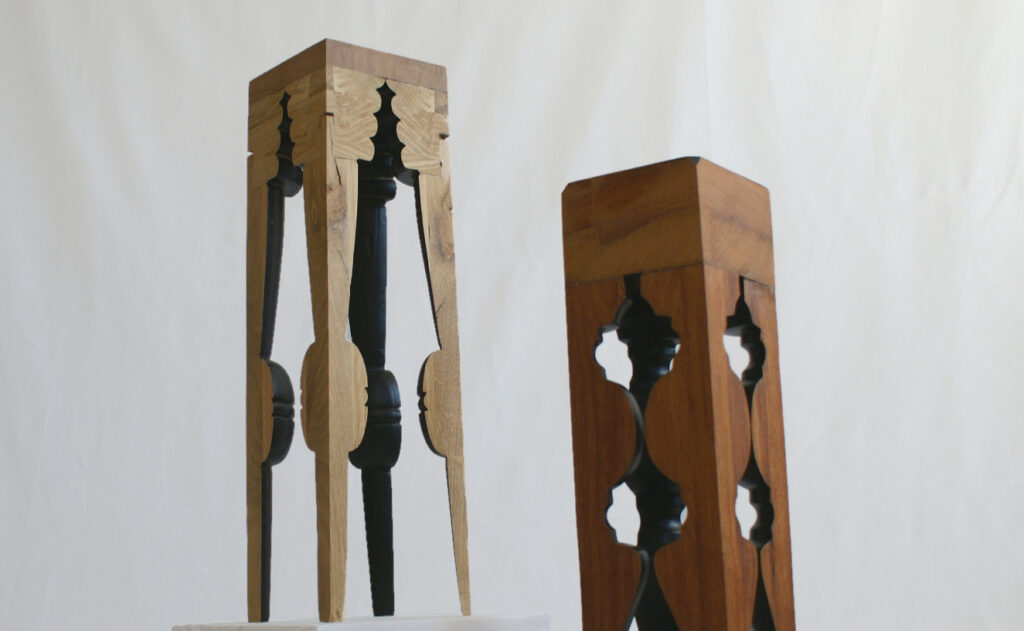
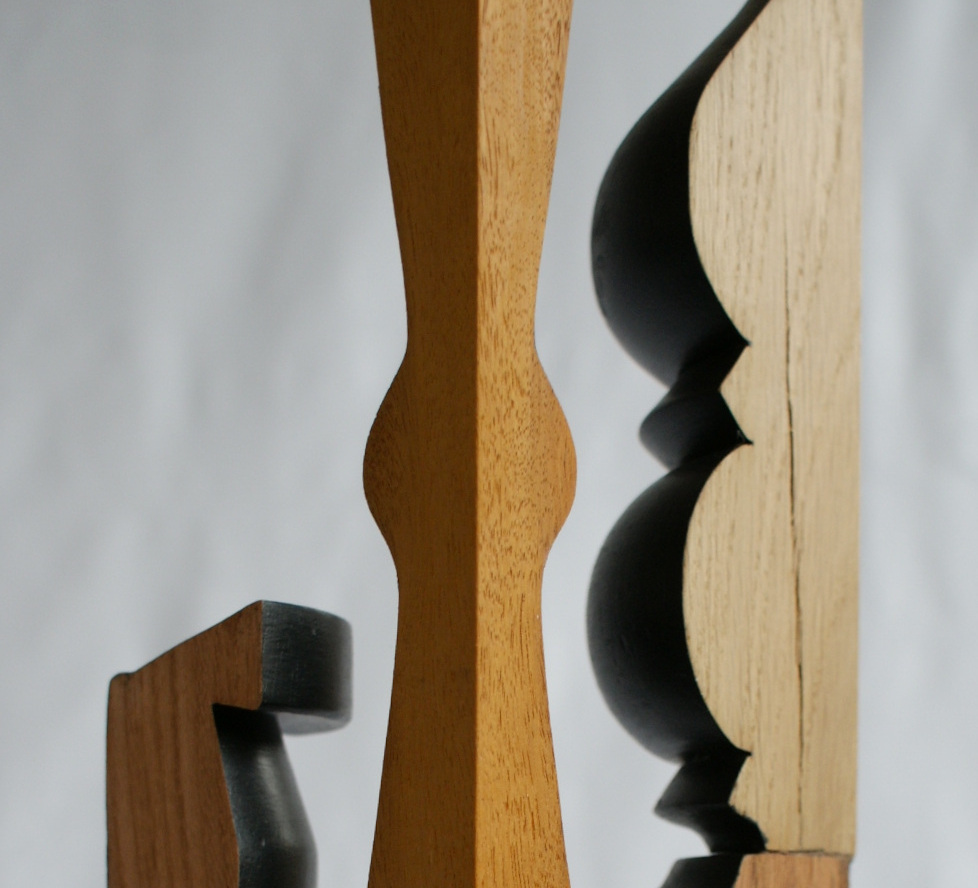
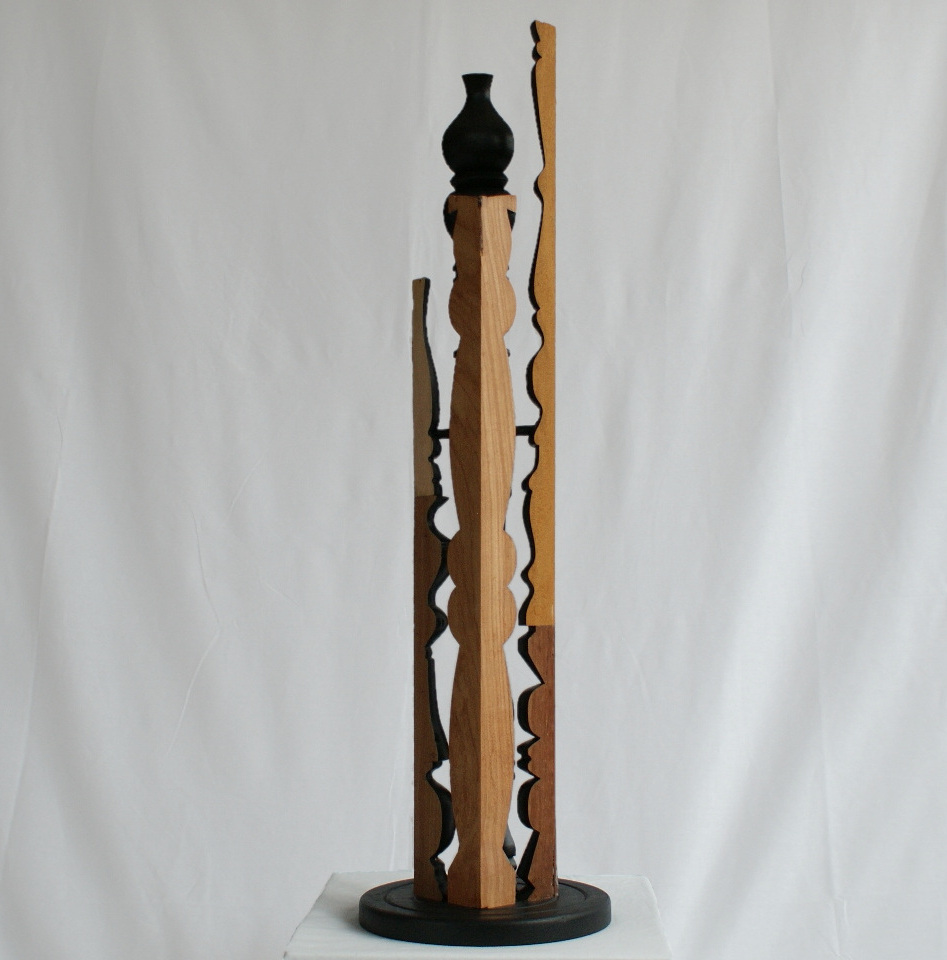
True painting this handmade candle black and quartering it, I wanted to see what the inside of the candles could tell us about the craftsman. What type of wood they used, what type of methods were implemented while assembling the wood that would ultimately become a candle. By taking these two different candles apart, there is a difference spotted in the working process of two different woodturners.
Part 2/3, Turn around
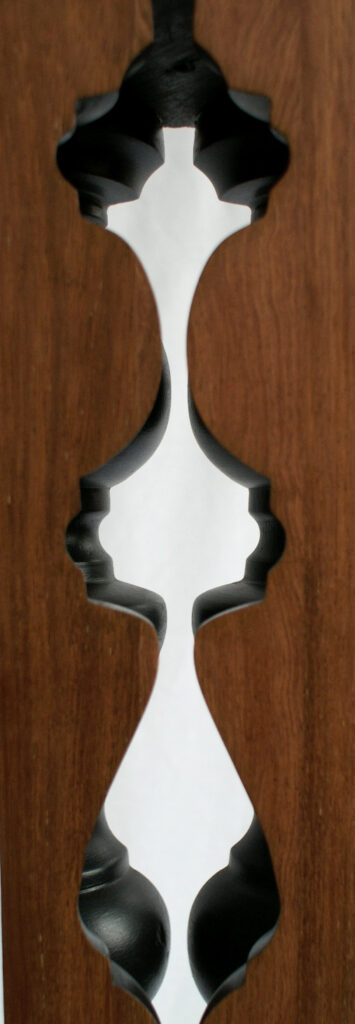
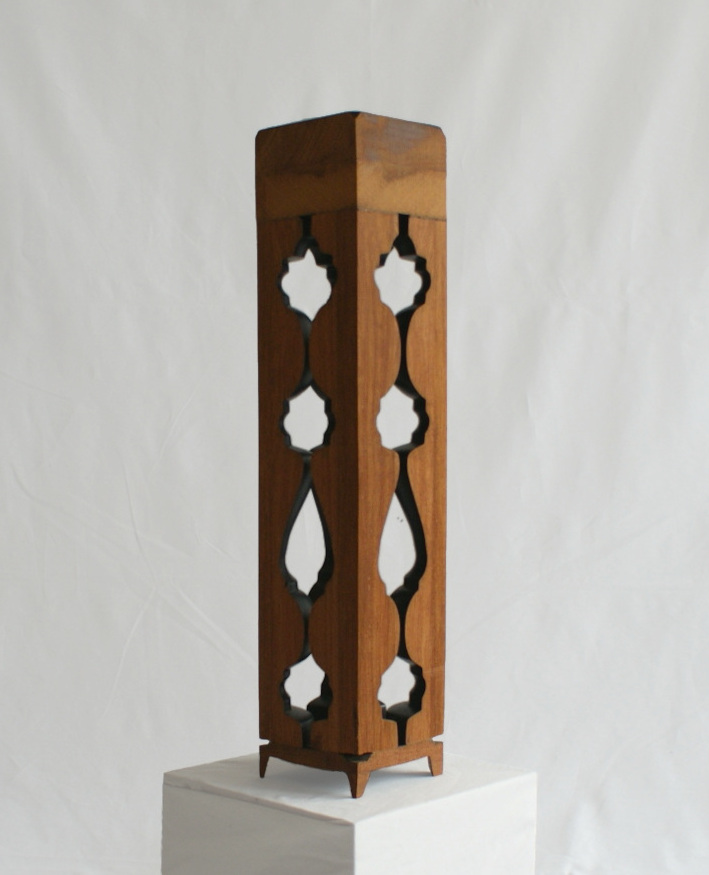
‘Turn around’ is a collaboration between the different colors of the wood, and the different patterns the craftsman used while making the candles. By using all these different aspects of the pieces together into one object, the differences between these expressions are made obvious by their display in the four sides of the beam-shaped presentation. This while the black interior of the object creates different patterns depending on from which side you approach the object.
Part 3/3,
RPC (Revalation Per Candle)
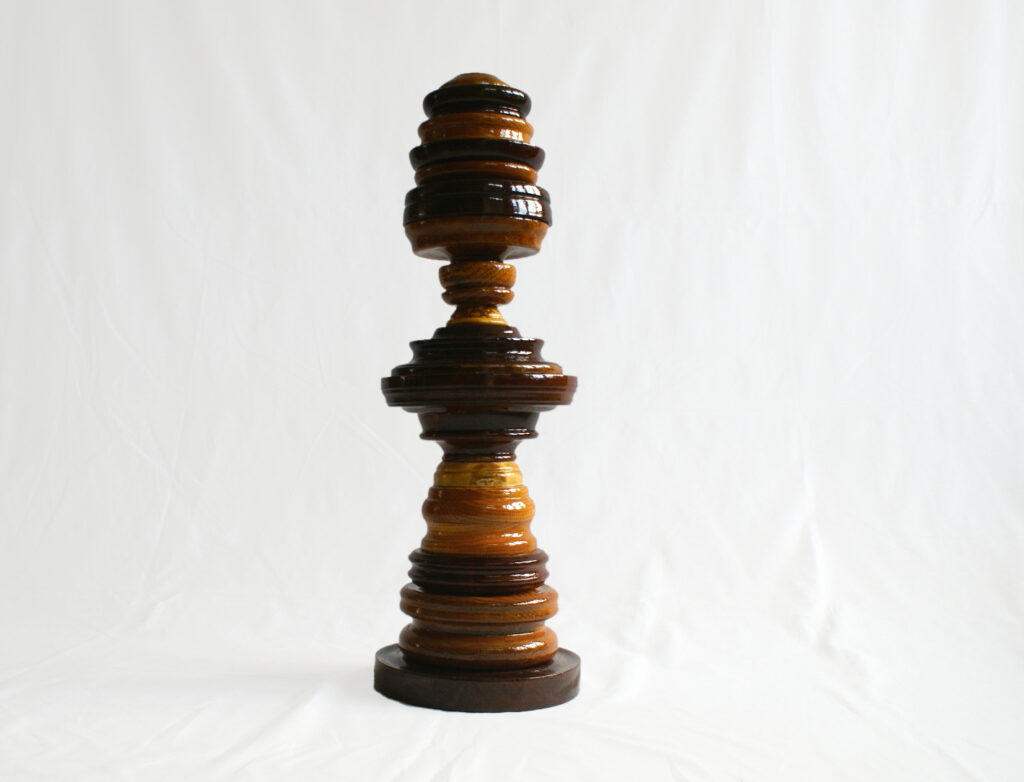
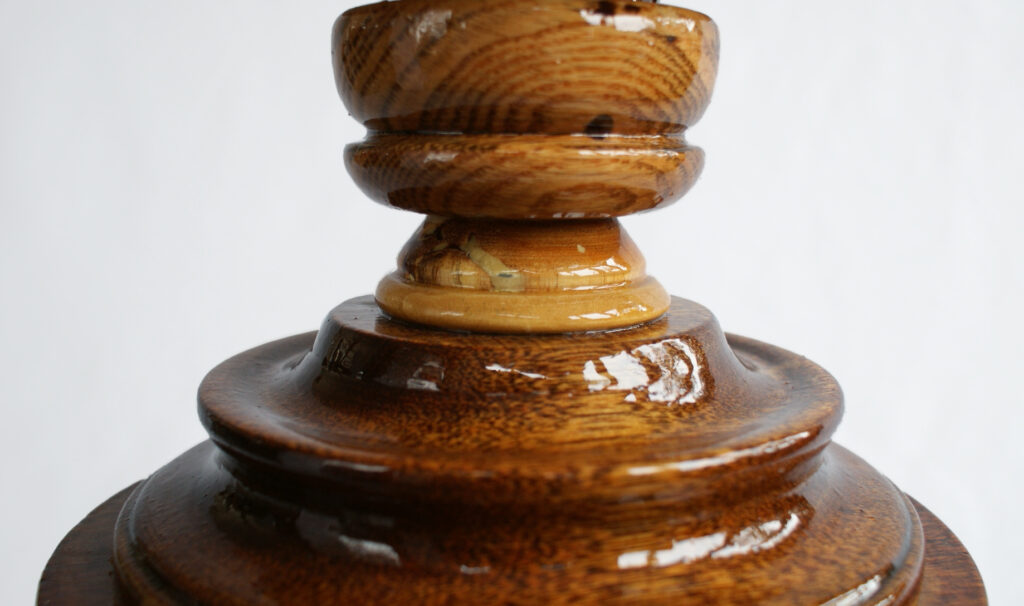
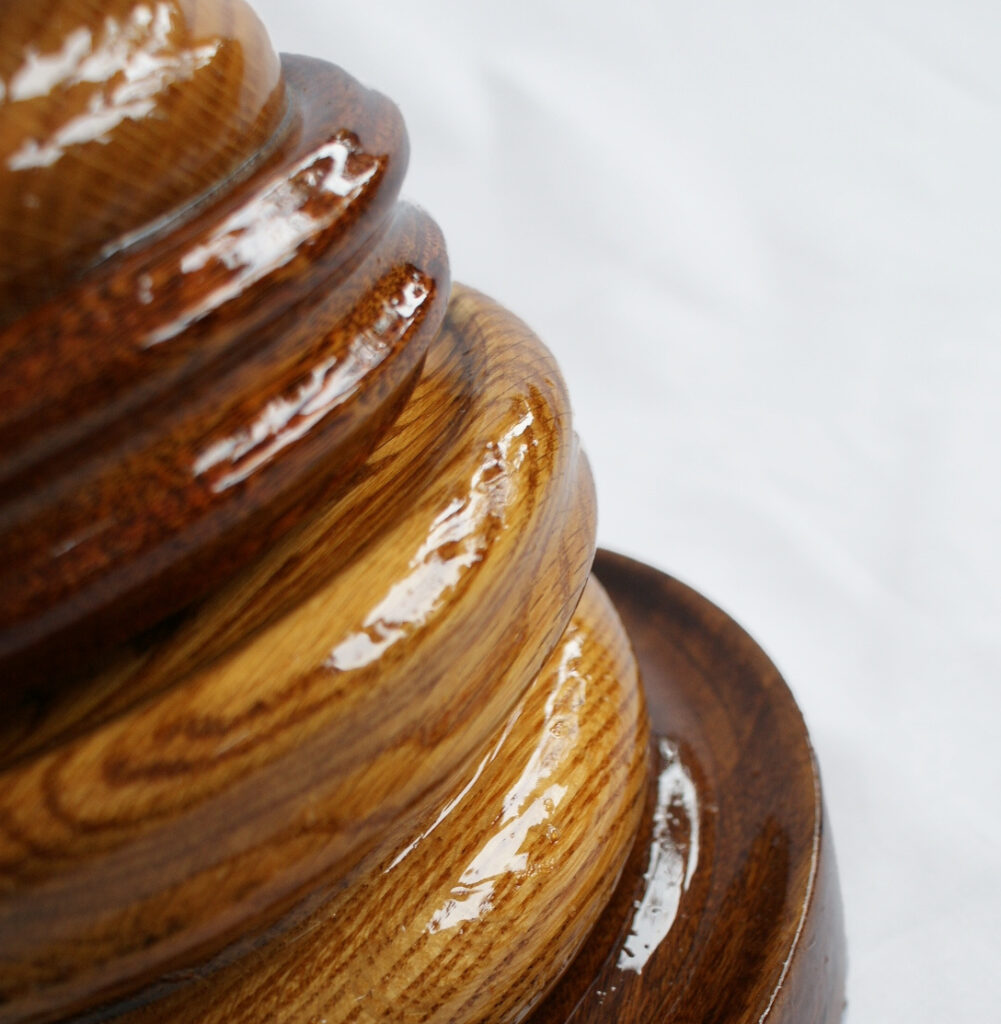
The name RPC, which stands for ‘Revalation Per Candle’, and is a wordplay on the abbreviation RPM. This deepening into why these different types of wood and ways of turning would work well together, was made using the candle stands that were left after creating ‘everted’ and ‘Turn around’. The different colors and woodgrains of the wood are both emphasized and unified by first removing the layers of varnish/paint that where covering the wood. After the natural grains and colors of the wood where revealed to the world again, a glossy coating was used to really make these elements of the wood pop. The coating, which is normally used for boats, is layered on the object in about 10 layers, to draw extra attention to the different colors and woodgrain, giving them a way to shine.